AI consulting for accountancy practices

The work keeps growing. Your team doesn’t have to.

HiveIQ puts AI to work inside accountancy practices — on the coding, the packs, the working papers and the queries — so the first draft is ready before anyone sits down to it. Your people review, decide and sign.

Scroll
Hours back, every weekPreparation that swallowed an afternoon comes back as a draft to review.
Capacity without hiringTake on more clients without adding to the payroll or to January.
Consistent and defensibleThe same standard on every file, with a person signing off every time.
Where practices are

Four conversations we have every week.

Almost every practice arrives at AI from one of four positions. Whichever one you recognise, the first step is the same — and it costs nothing.

A calendar with the AI review pushed to next quarter

“We’ve been meaning to look at this for about a year.”

The practice that keeps deferring

What is actually going on
There is no shortage of intent. There is simply nobody whose job it is to work out what to do, so it moves to next quarter — every quarter — while the firm down the road quietly gets on with it.
What we do about it
A readiness review puts a written, ranked list in front of the partners: where the hours go, what AI would take off the desk first, and what each would cost. An open-ended project becomes three decisions with numbers attached.

A year of “we really should” becomes a plan with a start date.
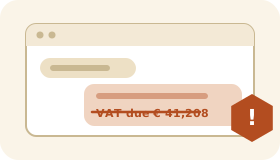
A generic AI tool returning a figure that cannot be trusted

“We tried it. It made a number up.”

The practice that has been burned

What is actually going on
A general-purpose chatbot, no context, no controls and no check step — it behaved exactly as it was always going to. The expensive part is the conclusion that follows: AI doesn’t work for accounting.
What we do about it
The same technology, configured to your nominal structure, your formats and your rules, with the review step designed into the workflow. It drafts; your team checks; nothing reaches a client unchecked.

Output that is actually worth the time it takes to review.

A traditional ledger beside a screen, with the gap being bridged

“I don’t see how this applies to what we do.”

The practice that isn’t convinced

What is actually going on
Fair enough. Almost every AI demonstration is written for software companies. Nobody has yet shown you a bank reconciliation, a lead schedule or a client query being drafted from one of your own files.
What we do about it
Sessions run on your work, not an invented company. You watch your own transactions coded and your own pack commentary drafted before deciding whether any of it is worth having.

A decision made on evidence from your own files, not a brochure.

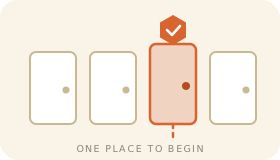
Several possible starting points with one clearly lit

“I’m convinced. I just don’t know where to begin.”

The practice that is ready to move

What is actually going on
The risk here is not scepticism, it is spending the budget in the wrong place — training where the problem was the data, or a tool where the problem was the process.
What we do about it
We rank the opportunities by hours saved against difficulty, then start with whichever pays back fastest. Foundations first if the team needs them, straight to deployment if they don’t.

Money spent where it returns first, not where it is loudest.

Where the hours go

The work that comes off your desk first.

These are the jobs AI is genuinely good at: high volume, rule-bound, and reviewed by a person before they count. Each one is drafted from your own files, in your own format.

Transaction coding

Hundreds of lines classified against your nominal structure, with anything doubtful flagged rather than guessed.

A day of codingAn hour of review
%
VAT treatment

Applied consistently across the ledger, with exceptions raised for a person to judge.

Line by lineExceptions only
Reconciliations

Matched off, with the unmatched items grouped, explained and ready to query.

Chasing matchesGrouped and explained
Σ
Management packs

Variance and trend commentary drafted from your numbers, in your house style.

An afternoon writing upAn hour editing
Working papers

Lead and supporting schedules assembled and cross-referenced straight from the file.

Building from scratchAssembled, then checked
Client queries

Query lists drafted in the firm’s own tone and ready to send, then chased.

Drafting each oneA list to approve
Year-end preparation

The file assembled and the obvious questions asked before you open it.

Opening a cold fileA file already read
Research and correspondence

Treatments summarised with their sources; letters and notes drafted in minutes.

An hour huntingA summary with sources
Records arrive, HiveIQ prepares the draft in minutes, your team reviews, the work goes out signed
Why now

The advantage belongs to whoever moves first.

In three years this will be ordinary. The practices that will be winning on turnaround, quoting on capacity and holding their margin are the ones setting it up while it is still unusual.

01 · Competitive

Your clients are already asking

They are being asked the same question by their own customers. The practice with a clear answer looks in control. The practice without one looks behind.

02 · Margin

Same fee, less time

Fixed-fee work is where this lands hardest. Every hour taken out of preparation goes to the bottom line — or back into advisory work you can charge for.

03 · Timing

Set it up before the season, not during it

This takes weeks rather than days, and nobody configures anything useful in January. The quiet part of the year is the part to use.

How we work

Four stages. Start wherever the practice actually is.

Most firms begin with an assessment and work through in sequence. Each stage stands on its own, and the introduction establishes which one is the right place to start.

ASSESS

Where the hours actually go

We map how work moves through the practice and report on where AI would save the most time, where it would not, and what stands in the way.

EQUIP

A team that can use it well

What AI does and where it fails, the controls a regulated practice needs, and applied productivity across the tools you already pay for.

APPLY

Configured to your methods

Skills built around your bookkeeping, reporting and year-end work, set to your own formats and deployed on your own systems.

SUSTAIN

Kept current as tools change

Ongoing tuning of what has been deployed, and a named contact for the questions that come up in between.

Every engagement leaves something in the practice A written assessment, session materials, prompt libraries in your firm’s name, configured skills running on your systems, and documentation your team can work from.
What each stage involves
Fast, not reckless

Speed that survives a review.

A saved hour is worth nothing if it costs you a breach. Every engagement establishes what may be used, on what information, and where a person must sign before anything reaches a client.

A person signs, every time

AI prepares the draft. Judgement, review and sign-off stay where they belong.

Data handled properly

GDPR, client confidentiality and your subscription terms are settled before client information is involved.

On your own systems

Everything configured for the practice runs on your subscriptions and remains yours to operate or retire.

Client information held under controls, with a document checked and signed
An accountancy practice desk at the end of the day
Who you would be working with

Built by someone who has done the work.

HiveIQ is run by a qualified accountant who prepared the packs, chased the queries and closed the year before working with AI.

That is why the advice is specific rather than general, and why you will be told plainly when something is not worth doing. Nobody here is going to sell you a project that does not pay for itself.

FAQ

Common questions.

What does it cost?
Every fee is published. Services run from €250 for a single consultation to €4,999 for the full sequence from assessment through to three deployed accounting skills. The pricing page shows each service and the bundle it belongs to, side by side.
Do we need to buy software from HiveIQ?
No. HiveIQ supplies no software. Everything is configured on tools your practice already holds or chooses — typically Microsoft 365 and an AI subscription of your own. The accounts, the data and the licences stay yours.
Does the team need to be technical?
No. Nothing involves code and nothing requires an IT project. If your team uses Excel and Outlook, they can use what is taught.
How is client confidentiality handled?
It is settled at the outset: which tools may be used, what may be entered into them, where that information goes, and where a person must review before anything reaches a client.
How long before we see anything back?
The first productivity sessions land within weeks and pay back immediately in drafting and admin time. Configured accounting skills take two to three weeks each, most of which is our work rather than yours.
How large does a practice need to be?
From sole practitioners upwards. The assessment will say plainly if it is too early for yours — that answer has been given before and will be again.
Next step

Twenty minutes. Then you will know.

No charge, no obligation and no pitch. We will ask where your hours go and tell you straight whether AI would pay for itself in your practice — and if so, which piece of work to point it at first.